55%: The Speeding Rate That Forced Tesla to Build Its Own Maps
Tesla is developing a proprietary mapping architecture to address FSD navigation errors, marking a significant strategic departure from its previous vision-only philosophy.
By Andrew Fletcher ·
In a recent audit of traffic compliance in Brussels, Tesla’s Full Self-Driving system was recorded exceeding the 30 km/h speed limit in 55% of the test zones, averaging 44 km/h. This statistic underscores the persistent technical gaps in Tesla’s autonomous driving capabilities, particularly regarding environmental interpretation. The issue is not isolated to Europe; in the United States, the National Highway Traffic Safety Administration is currently evaluating a potential investigation into claims that Tesla Robotaxis have sped through active school zones, a concern covering approximately 1,000 Model Y and Cybercab vehicles.
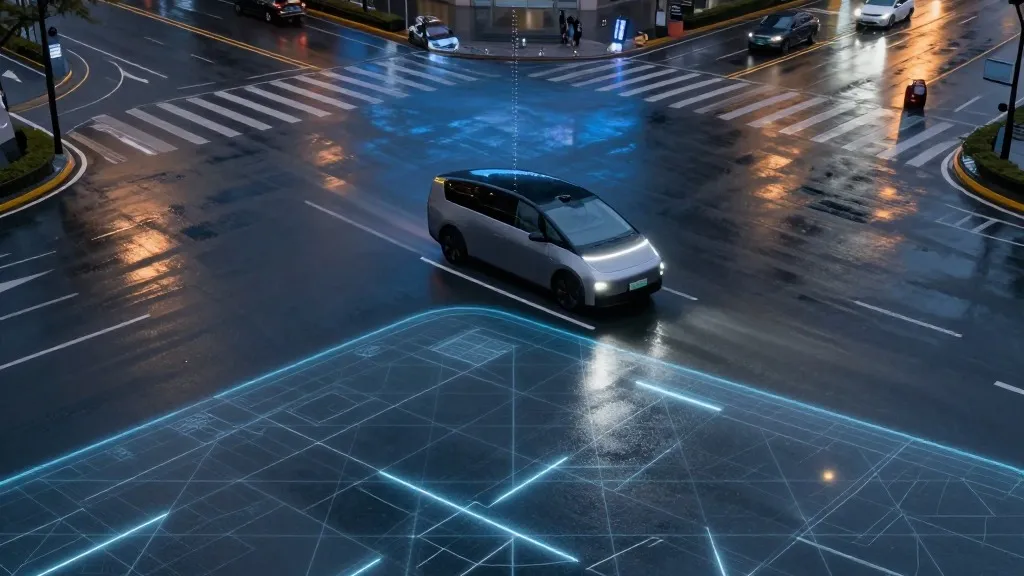
These navigational failures have prompted a significant internal strategy shift. During the Q3 2026 earnings call, Ashok Elluswamy, Tesla’s Vice President of AI, confirmed that the company is developing its own mapping and navigation architecture. This new system will be powered by data collected from the entire Tesla fleet, allowing the software to learn collective driving patterns and individual user preferences. Elluswamy stated that the company should not be relying on external providers for this critical data, marking a clear break from the third-party navigation services previously used.
The implementation of this new map layer is staged. It will first debut in FSD version 15, handling the start and end points of trips. Over the coming months, the system is expected to take over broader navigation, parking logic, and destination processing. The primary goal is to solve specific, high-frequency errors where the current vision-based system struggles, such as reading speed limit signs and selecting optimal routes.
This move represents a notable reversal for a company that previously dismissed mapping as a fundamental flaw in autonomous design. In 2019, CEO Elon Musk argued that high-precision maps made self-driving systems "extremely brittle" and called reliance on them a "really bad idea." At the time, Tesla positioned its camera-and-AI approach as superior to competitors like Waymo, which utilized lidar and detailed HD maps. Musk’s 2019 Autonomy Day presentation explicitly labeled lidar a "fool’s errand," a stance that defined Tesla’s unique selling proposition for years.
The shift is driven by the need to understand the environment more reliably. While Tesla has always used basic navigation data, the new internal map is designed to be more granular and adaptive. By aggregating data from millions of vehicles, Tesla can create a dynamic representation of road conditions that helps the AI interpret complex scenarios, such as variable speed zones, with greater accuracy than its current end-to-end vision model.
This development brings Tesla’s operational model closer to that of its competitors. Like Waymo, Tesla’s fleet now serves a dual purpose: transporting passengers and mapping the roads. The company’s Robotaxi service already operates within small, geofenced areas, a constraint that aligns with map-based navigation. Although Tesla is not yet using centimeter-level HD maps, the trajectory suggests a move toward increasingly detailed, fleet-built cartography to ensure the safety and reliability of its autonomous systems.
The stakes for Tesla are high, as the success of FSD hinges on resolving these foundational errors. If the new mapping architecture can effectively correct speed limit misreadings and routing inefficiencies, it could significantly improve the safety profile of the vehicle fleet. For a company that has marketed its technology as a universal, vision-based solution, the adoption of proprietary maps signals a pragmatic evolution in its approach to achieving full autonomy.
Source: Electrek