UK Households Stock Up as Government Promotes Three-Day Supply Plan
Residents across Britain are buying canned goods and water in response to new official advice on emergency preparedness.
By Emily Carter ·
The United Kingdom has long relied on its supply chains, but that assumption is shifting. This week, the government launched a new campaign asking citizens to keep three days' worth of food and water at home.
The initiative was announced on Thursday. It aims to help people handle various emergencies. These range from power cuts to disruptions in supply lines. The advice aligns with broader concerns about climate change and security threats from abroad, including state-sponsored risks from Russia.
Many families began preparing before this announcement. Ministers had sent similar signals for months. Now, the official guidance is driving more specific action in households across the country.
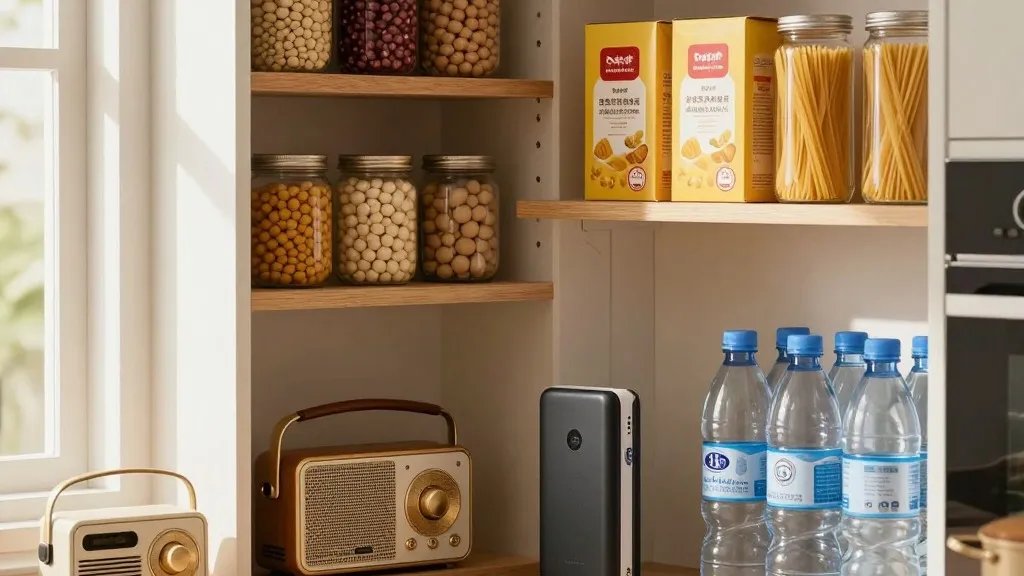
Lawrence Barratt in Hampshire is taking the advice seriously. He started stocking up two weeks ago. He buys tinned beans, soups, noodles, and rice with each weekly shop. He is also buying bottled water in small amounts. His goal is to have enough for two people for three days. He has also set aside a first aid kit, a battery radio, and a torch. He owns a portable power bank that he believes can charge phones and run small appliances.
Barratt said he began after seeing the government's online advice. He also remembered the empty shelves during the first lockdown in 2020. That experience made him realize he was unprepared for a crisis. The new campaign website helped him see the gap in his own planning.
In London, Marco Camurri is also preparing his home. He is collecting pasta, tinned food, medicine, and toilet paper. He noted that his family remembers the disruptions of the pandemic. With relatives in Europe, he believes they could leave temporarily if the UK entered a conflict or if infrastructure failed badly. His small garden holds wood for heating water if needed. The family keeps power banks charged and maintains a fuel tank at least half full. They started this process a few months ago due to reports of supply chain issues linked to El Niño. They track expiry dates in a spreadsheet to rotate their stock, which they call their doomsday stash.
Jack Davenport in North Shields cited similar reasons. He pointed to climate disasters and technological threats as drivers for his preparation. He feels it is hard to judge the scale of these risks. He believes the government wants to reduce long-term panic by making these scenarios seem manageable. He noted that several generations have not faced the kind of hardship that was common before the war.
Not everyone agrees with the approach. Deirdre O'Sullivan from Leicester called the guidance silly. She compared it to 1970s advice about nuclear attacks. She argued that the advice is too vague for a real emergency. She thinks any threat to drinking water should be explained more precisely. She also believes a severe food shortage would likely last much longer than three days.
O'Sullivan said the plan feels like a policy created just to show that something is being done. She compared the effort to a fictional government minister demonstrating a useless policy. The debate highlights a split in public opinion on how much preparation is reasonable for modern life.
The government will continue to promote the Be Ready campaign. Citizens will likely keep assessing their own needs based on local conditions and personal risk tolerance. The next few months will show if this shift in household habits becomes a lasting trend in Britain.
Source: The Guardian